Expansion Joints – Definition, Types & Applications

Metal expansion joints (compensators) are core components used to compensate for thermal expansion and displacement in pipelines, vessels, and mechanical equipment. They are widely used in buildings, bridges, piping systems, HVAC systems, and industrial equipment to absorb thermal displacement and attenuate vibration.
 
What Is an Expansion Joint?

Definition

An expansion joint is a flexible connecting device installed in a structure or piping system that allows for axial, lateral, and angular displacement caused by thermal expansion, seismic loads, wind loads, or mechanical vibrations, preventing engineering accidents such as cracking, leakage, and fatigue failure due to stress concentration.

Working Principle

Using a metal bellows as the core elastic element, displacement compensation is achieved through the compression or stretching of its folds. Combined with connecting components (welded/flanged/sleeved) at both ends and guiding structures, it balances thermal stress and mechanical vibrations in the system, maintaining pipeline straightness and equipment operational stability.
Purpose & Importance of Expansion Joints
 Absorbs thermal expansion displacement (such as the expansion of steam pipes due to temperature increase), preventing pipe bending, deformation, or weld cracking.
 Mitigates structural displacement caused by external forces such as earthquakes and wind loads, protecting building load-bearing walls and bridge piers.
 Reduces fluid impact vibration and noise, minimizes equipment support wear, and extends the service life of equipment.
 Seals high-temperature and high-pressure media, preventing leakage of toxic/flammable media and avoiding safety accidents.
 Adapts to complex working conditions (such as high temperature, corrosion, and high pressure), meeting customized needs of special industries.

Building & Bridge Importance

Without expansion joints, concrete buildings will develop cracks due to temperature-induced contraction, and steel structure bridges may experience deck misalignment or even collapse due to thermal displacement, affecting structural safety and service life.

Piping System Importance

Piping systems without expansion joints are prone to flange leakage and pipe rupture due to thermal stress concentration, leading to production interruptions, environmental pollution, and even explosion risks, seriously impacting industrial safety and economic benefits.
Types of Expansion Joints
 Absorbs thermal expansion displacement (such as the expansion of steam pipes due to temperature increase), preventing pipe bending, deformation, or weld cracking.
 Mitigates structural displacement caused by external forces such as earthquakes and wind loads, protecting building load-bearing walls and bridge piers.
 Reduces fluid impact vibration and noise, minimizes equipment support wear, and extends the service life of equipment.
 Seals high-temperature and high-pressure media, preventing leakage of toxic/flammable media and avoiding safety accidents.
Adapts to complex working conditions (such as high temperature, corrosion, and high pressure), meeting customized needs of special industries.

Definition

An expansion joint is a flexible connecting device installed in a structure or piping system that allows for axial, lateral, and angular displacement caused by thermal expansion, seismic loads, wind loads, or mechanical vibrations, preventing engineering accidents such as cracking, leakage, and fatigue failure due to stress concentration.

Working Principle

Using a metal bellows as the core elastic element, displacement compensation is achieved through the compression or stretching of its folds. Combined with connecting components (welded/flanged/sleeved) at both ends and guiding structures, it balances thermal stress and mechanical vibrations in the system, maintaining pipeline straightness and equipment operational stability.
Materials of Expansion Joints
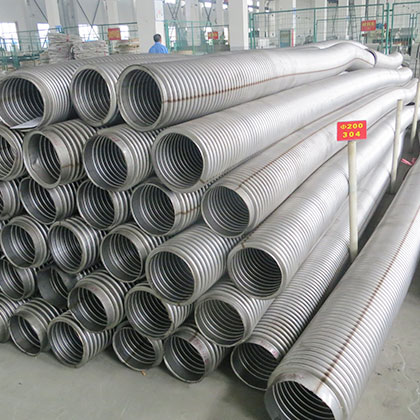
Metal Expansion Joints (Stainless Steel Bellows)​​​​​​​
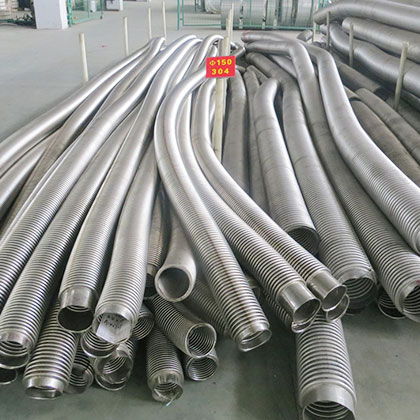
SS304/SS316 bellows, resistant to high temperatures up to 1200℃ and high pressure up to PN100, chemically stable and corrosion-resistant, with a compact structure. Used in steam pipelines and chemical reactors, absorbing axial displacement of ±300mm, reducing pipeline stress, and extending equipment life.
Rubber Expansion Joints (EPDM, Neoprene, etc.)​​​​​​​
EPDM/Neoprene rubber, providing vibration isolation and noise reduction of 10-15dB, suitable for low to medium pressure systems of 0-2.5MPa. Used in HVAC water pipes and heating networks, preventing flange leakage, and offering a long service life of over 15 years.
​​​​​​​
PTFE & Fabric Expansion Joints (Non-metallic)
PTFE lining provides strong corrosion resistance, used in pickling pipelines and semiconductor exhaust systems. High-temperature fabric (glass fiber/ceramic fiber) withstands 1000℃ flue gas, used in boiler exhaust ducts, providing axial compensation of 500mm, lightweight, flexible, and easy to install.

Expansion Joint

    No products found

Typical Applications of Expansion Joints
Design Standards & Selection Guide

Global Standards

Strictly adheres to international/domestic standards such as EJMA (Expansion Joint Manufacturers Association), ASME B31.3 (Pressure Piping Code), GB/T12777 (General Technical Conditions for Metal Bellows Expansion Joints), and ISO21048 (Industrial Piping Expansion Joints), while also meeting regional specifications such as British BS 8110, Indian IS 15587, Australian AS 4041, and Japanese JIS B 8277.

Selection Parameters

Comprehensive evaluation of media corrosiveness (e.g., H₂S, Cl⁻), temperature range (-196℃~1200℃), pressure rating (PN0.6~PN100), displacement (axial ±300mm/lateral 50mm/angular 5°), pipe size (DN15~DN6000), installation length, and end connection methods (welding/flange/quick connector) is required.


Custom Design Service

Provides non-standard customized design services, issuing professional calculation reports based on CFD/FEA simulations to meet special working conditions (such as ultra-high temperature, strong corrosion, and large displacement), and supports full-process OEM/ODM services.


Installation & Maintenance of Expansion Joints
Concrete Installation​​​​​​​
Use a concrete cutting machine to create expansion joints, then fill them with polyurethane sealant and elastic rubber pads to ensure synchronous deformation with the concrete and provide waterproofing and dustproofing; leave an installation gap during installation to prevent sealant failure due to thermal expansion and contraction.
Piping Installation​​​​​​​
Precisely locate the installation position, use welding/flange connections to ensure sealing, and install guide supports to prevent lateral displacement. After installation, perform pressure testing and leak detection to ensure safe system operation.​​​
Maintenance Tips​​​​​​​
Regularly check for bellows fatigue cracks, casing corrosion, anchor point loosening, seal leaks, and abnormal vibrations; lubricate connecting parts quarterly and conduct a comprehensive inspection annually; use metal repair agents to repair minor damage, and replace severely damaged parts promptly.
Repair & Replacement of Expansion Joints

Concrete Repair

For cracks in concrete expansion joints, a composite repair method using polyurethane sealant and fiberglass fabric is employed to restore waterproofing and expansion functions; severe cracks require cleaning the substrate before refilling with elastic sealing material.
 

Building & Industrial Repair

For walls, equipment interfaces, and other areas, a composite repair method using metal repair patches and elastic sealing tape is used to prevent leakage and displacement; industrial equipment interfaces require airtightness testing to ensure the effectiveness of the repair.
 

Replacement Indicators

When bellows exhibit through cracks, loss of elasticity (inability to return to their original shape), irreparable leaks, or excessive displacement (exceeding 15% of the design compensation), they must be replaced promptly; the replacement part must match the original model specifications to ensure system compatibility.
FAQs On Expansion Joints
Downloads & Related Products
  • Catalogue of Fustar Bellows, New Version

  • Catalogue---Jiangsu Fustar.pdf

  • Data Needed for Metal Expansion Joint Design.docx

  • Table of Structural Type of Bellows Expansion Joints.docx

Talk to Our Expansion Joint Experts

If You Have Any Questions Or Needs, Please Contact Us For Quick And Free Answers And Solutions!
Currently, our products mainly include flexible metal hose, bellows expansion joint, corrugated pipe, metal compensator, fabric expansion joint, stainless steel braids, PTFE bellows, exhaust pipe and other products.

PRODUCT CATEGORY

QUICK LINKS

CONTACT US

Tel: +86-173-2160-5009
Email: sales@jsbellows.com
Add: Jiangyan Chengdong Industrial Park, Taizhou City, Jiangsu Province

SIGN UP FOR OUR NEWSLETTER

Copyright © 2026 Taizhou Fustar Bellows Co., Ltd. All Rights Reserved.|Sitemap | Privacy Policy