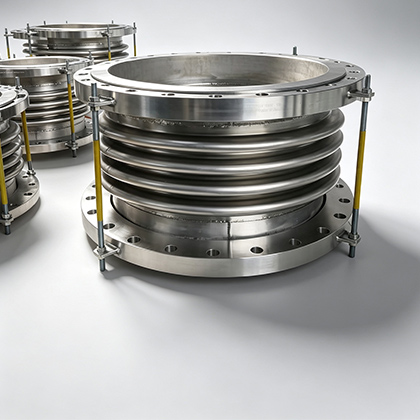
Metal Bellows – Welded & Formed Bellows for Sealing, Vacuum, and Expansion Applications

Metal bellows are core elastic components used to compensate for displacement, maintain sealing, transmit pressure, and absorb vibration. They are widely used in critical applications such as high temperature, high pressure, vacuum, mechanical seals, expansion joints, gas turbines, and aerospace. This page provides a comprehensive overview of metal bellows, including material selection, structural design, product types, manufacturing processes, performance characteristics, industry applications, and customization services, helping you make precise selections and achieve high-performance system integration.
 
What Are Metal Bellows?
Metal bellows are manufactured from thin-walled metal materials through welding or forming processes. They consist of multiple annular corrugations and can absorb axial, lateral, and angular displacements while maintaining sealing performance. The core structure includes the bellows elements, end fittings, and weld/formed geometry. Their core applications include mechanical seals, pipe expansion joints, vacuum seals, flexible connections, and pressure transmission, making them critical components for ensuring the safe operation of systems
Types of Metal Bellows

Welded Metal Bellows

Manufactured using edge-welding or bending-welding processes, with wall thickness controllable between 0.05-0.5mm, suitable for high-precision sealing applications such as mechanical seals and sensors. Advantages include uniform wall thickness, excellent fatigue resistance, high dimensional accuracy, and the ability to withstand millions of fatigue cycles, making them suitable for aerospace precision equipment.

Formed / Hydroformed / Corrugated Bellows

Processed using hydroforming or mechanical corrugation processes, using 0.15-3mm stainless steel sheets, suitable for expansion joints, high-temperature and high-pressure pipelines, and gas turbine exhaust systems. Formed bellows have greater displacement compensation capabilities and excellent high-temperature resistance, making them suitable for demanding conditions such as nuclear power plant main steam pipelines.

Multi-layer / Reinforced Bellows

Utilizing a double-layer or multi-layer bellows composite structure, superimposed through welding or forming processes, suitable for high-temperature (≤1000℃), high-pressure (≥50MPa), and high-fatigue cycle environments. The multi-layer structure enhances pressure resistance and fatigue life, making them suitable for extreme conditions such as chemical high-pressure reactors and deep-sea oil and gas transportation.

Small / Special-end Bellows

Small-sized bellows (outer diameter ≤20mm) are suitable for medical equipment and miniature sensors; special end designs include flexible male ends, female ends, and customized interfaces, meeting the needs of special industries such as aerospace hydraulic systems and semiconductor equipment.


Applications of Metal Bellows
Metal Bellows Materials
Stainless Steel (304/316/321)​​​​​​​
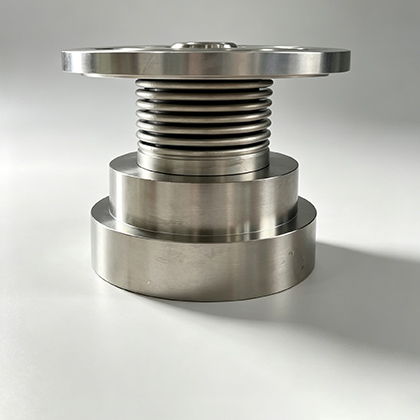
304 stainless steel is suitable for normal temperature and low-pressure applications; 316 stainless steel is resistant to chloride ion corrosion and is suitable for seawater/chemical equipment; 321 stainless steel is titanium-stabilized, resistant to high-temperature oxidation, and suitable for steam/high-temperature gas systems.
High-Nickel Alloys​​​​​​​
Inconel alloys are resistant to high temperatures (≤1100℃) and oxidative corrosion, and are suitable for aircraft engine fuel lines; Hastelloy alloys are resistant to strong acids and bases and are suitable for chemical pickling equipment; titanium alloys are corrosion-resistant and lightweight, and are suitable for medical implant devices.
Copper & Special Materials​​​​​​​
Copper alloys are suitable for low-pressure, temperature-controlled equipment and sensors; special materials such as nickel-titanium alloys (shape memory alloys) are suitable for shape memory applications and are suitable for flexible joints in intelligent robots.
Performance & Characteristics

Performance Attributes

 Flexibility: Absorbs axial/lateral/angular displacement, adapting to complex operating conditions and compensation requirements;

 High Cyclic Fatigue Resistance: Fatigue life exceeding one million cycles, ensuring long-term stable operation;

 Resistance: Suitable for corrosive environments including strong acids, strong bases, and chloride ions;

 High Temperature Resistance: Applicable in a wide temperature range up to ≤1100℃, suitable for high-temperature equipment;

 Vacuum Sealing: Vacuum level reaches 10⁻⁶ Pa, suitable for semiconductor vacuum systems.

Function & Working Principle

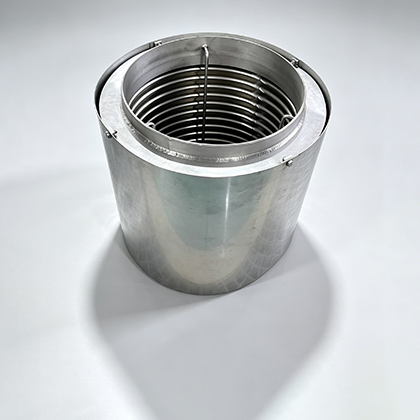
Metal bellows achieve displacement compensation and pressure transmission through elastic deformation of the corrugated structure. The manufacturing process includes material selection, forming/welding processes, heat treatment, and surface treatment. The design must comply with standards such as ASME B31.3 and EJMA, and stress distribution and fatigue life are verified through FEA simulation.
Custom & OEM Metal Bellows Services
We support full-dimensional customization of materials, wall thickness, dimensions, end connections, temperature resistance, and pressure resistance. We provide services including drawing design, prototype development, small-batch (≥10 pieces) and large-scale production. Our manufacturing capabilities cover welding, hydraulic forming, machining, and surface treatment. We perform 100% leak testing, fatigue testing, and pressure testing to ensure product reliability. CTA: Request a customized metal bellows solution today!
Metal Bellows Industry & Market
The metal bellows market continues to grow with the development of high-temperature equipment, aerospace, and energy industries. Welded bellows are in high demand in the field of precision mechanical seals, and the aerospace bellows market is benefiting from the expansion of the aerospace industry. Industry trends indicate that high-temperature alloy materials, multi-layer composite structures, and customized services will be future growth drivers.
FAQs On Expansion Joints
  • Q How long is the production time?

    A
    The sample production cycle is 2-4 weeks, and the mass production cycle is 6-8 weeks, depending on the complexity and quantity of the customization.
  • Q Can I get a custom-size metal bellow?

    A
    Yes, custom sizes are available for outer diameter, length, end connections, etc., to meet specific application requirements.
  • Q What materials are best for high temperature?

    A
    Inconel alloys are resistant to high temperatures (≤1100℃) and are suitable for aircraft engines; titanium alloys are lightweight and corrosion-resistant, making them suitable for medical equipment.
  • Q Welded vs. formed bellows — what’s the difference?

    A
    Welded bellows have thinner walls and higher precision, making them suitable for sealing applications; formed bellows have stronger displacement compensation capabilities and are suitable for high-temperature and high-pressure conditions.
  • Q What are metal bellows?

    A
    Metal bellows are elastic components made from thin-walled metal materials through welding or forming processes, used to compensate for displacement, maintain sealing, and absorb vibration.

Contact & Request a Quote

If You Have Any Questions Or Needs, Please Contact Us For Quick And Free Answers And Solutions!
Currently, our products mainly include flexible metal hose, bellows expansion joint, corrugated pipe, metal compensator, fabric expansion joint, stainless steel braids, PTFE bellows, exhaust pipe and other products.

PRODUCT CATEGORY

QUICK LINKS

CONTACT US

Mobile(WhatsApp): +86-17321605009
Email: sales@jsbellows.com
Add: City East Development Zone, Jiangyan Area,Taizhou City, Jiangsu Province, China

SIGN UP FOR OUR NEWSLETTER

Copyright © 2026 Taizhou Fustar Trade Co.,Ltd. All Rights Reserved.|Sitemap | Privacy Policy